Residential
Service Areas
Get in Touch
Resources
Retail and office
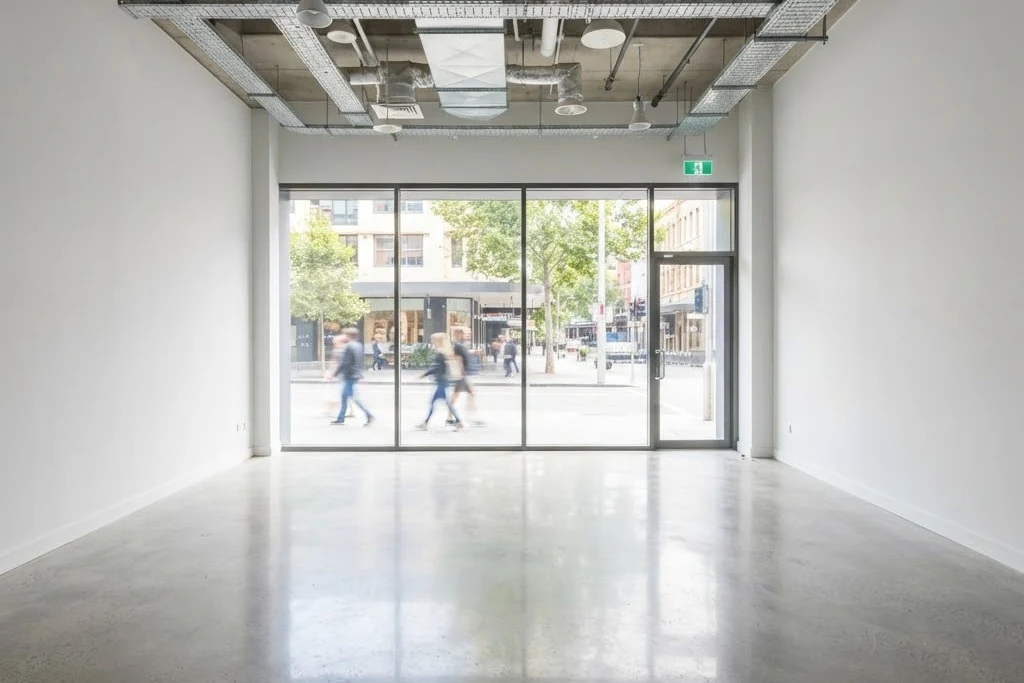
Storefronts and office suites still leave the landlord holding the structure, the roof and the common parts. This page sets out what stays with you and what does not.
The split
Even where a lease pushes most obligations to the tenant, the structure, the roof, the building envelope and the common parts remain the landlord problem. Those are the expensive items when they fail.
Which makes planned inspection of exactly those elements the highest-value work on a retail or office property. A roof checked annually is cheaper than a roof discovered by a tenant stock loss claim. See inspections.
Operating cost recovery is the other continuous task: apportioning shared services across tenancies, reconciling them annually and presenting the result. That runs through reporting, not maintenance.
Retail and office units
Structure, envelope, services and common parts, split between landlord and tenant in writing.
Roof, envelope and plant on a planned cycle, because those are the failures that cost most.
Shared services apportioned, reconciled annually, and presented with the supporting figures.
Renewal dates, escalations and options diarised years ahead rather than noticed late.
Fit-out and reinstatement
Fit-out at the start and reinstatement at the end are where commercial tenancies generate their largest disputes. Both need to be specified in the lease rather than negotiated when they arrive.
A tenant who fits out extensively often wants to leave it in place; a landlord may or may not want that. Deciding in advance, in the lease, is far cheaper than arguing during a handover, and it feeds the reinstatement scope.
Condition at each end is recorded the same way a residential move-in report is, with photographs. The principle does not change with the asset class, and the sums at stake are considerably larger. See commercial management.
Related types
Different lease shapes, same landlord questions.
The broader commercial picture and how it is quoted.
Learn moreResidential doors instead of commercial units.
Learn moreNightly stays instead of a commercial term.
Learn moreHow retail terms compare with the rest.
Learn moreRetail, answered
The questions that decide the landlord exposure.
Storefront unit with a five-year lease. They tracked the rent escalation dates and the increase was applied without me asking.
Office suite turnover included the cleaning, the minor repairs and the listing. New tenant signed within the month.
They handled the signage permission with the landlord side of the lease in mind. The tenant got the sign, I kept the terms.
Retail tenant's late payment was chased under the lease terms, politely and on schedule. Paid in full with the interest.
From the blog
Retail and office
Obligations split in writing, the expensive elements inspected on a cycle, and recoveries reconciled with figures attached.
Obligations mapped · Structure inspected · Quoted on scope